AUTOWORKS
The key to your vehicle's performance
We understand it is not just a car – it is an extension of your passion. We know that is important. This is why we offer everything automotive. We offer all your automotive needs and desires.

Process Beats Parts Swapping. A Real-World Case Study in Modern Vehicle Diagnostics

Modern vehicles aren’t just engines and gearboxes. They’re rolling computer networks, with dozens of modules that all need to agree on power state, communication, and intent before something as simple as cranking the engine can happen.
Because of that, good diagnostics today isn’t about guessing, swapping parts, or even having dealer-level tools.
It’s about process.
This job is a good example of that — and a good reminder that more than one fault can exist at the same time.
A Vehicle That Everyone Walked Away From
This vehicle came to us after a long and frustrating journey. Before arriving, it had already been through two dealer workshops.
Both had:
Despite all of that, neither dealer resolved the issues and both stepped away from the job.
When it arrived with us, the vehicle had:
At that point, this wasn’t just a fault — it was a at a minimum two systems faults possibly more.
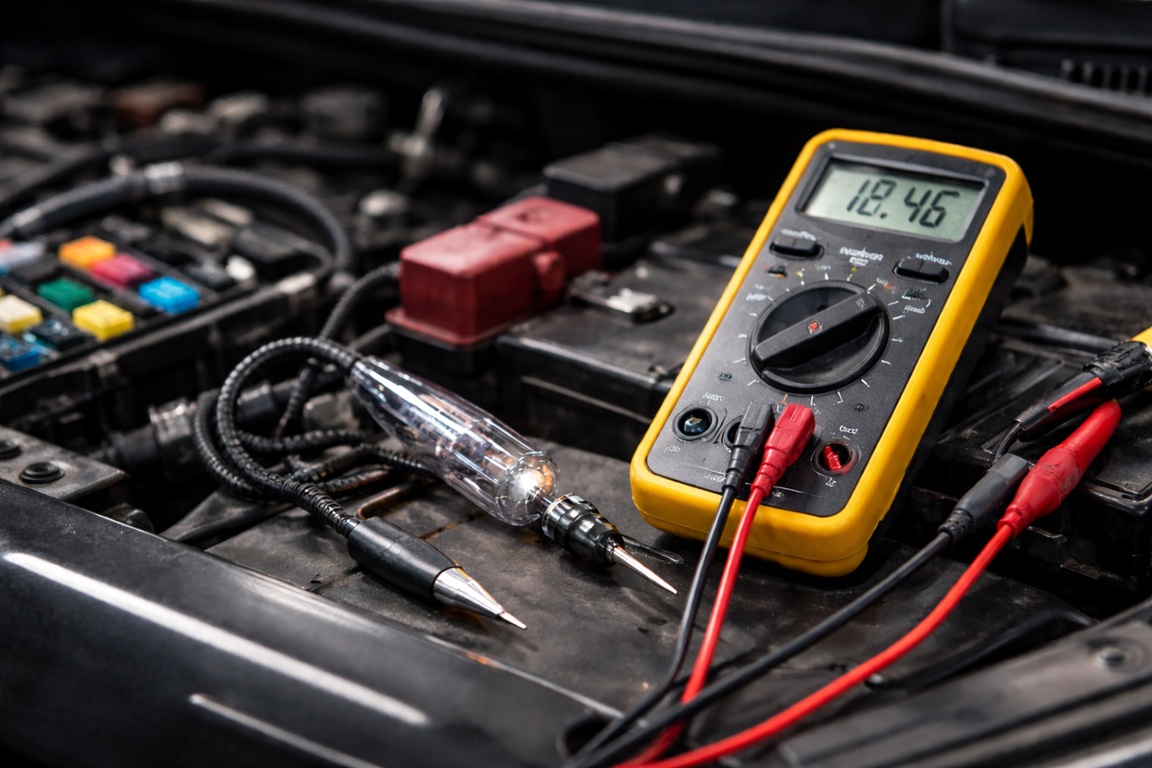
Step One: Reset the Thinking
We didn’t start with fault codes or parts history. We started by resetting the logic.
For those that are curious there were no fault codes.
The first questions were:
Very early on, something stood out:
The vehicle’s ignition state logic was wrong.
That alone explains a lot:
If a car can’t correctly enter or exit ignition states, every test after that becomes questionable.
Step Two: Prove It, Don’t Guess
There were plenty of familiar-looking symptoms.
No start? People think immobiliser.
No ECU comms? ECU gets blamed.
Instead of guessing, each theory was proved or ruled out:
What we confirmed:
The car wasn’t refusing to start.
It was never getting into a valid state where starting was possible.
The Reality of Late-Model Vehicles
This was a late-2022 vehicle, and that created a major complication.
At the time:
So, there was no option to just “check the diagram”.
At that point you either stop — or you rely on system knowledge and testing.
We chose the second option.
When the Wiring Diagrams Don’t Exist
With no wiring data available, the only way forward was to:
Manufacturers reuse architectures far more than people realise.
Layouts change, but the logic underneath is usually very similar.
This meant the only way to find faults was to follow the wiring, circuit by circuit.
What Was Actually Wrong (And What Was Fixed)
There wasn’t just one issue on this vehicle — there were multiple, unrelated faults, which is why it became so messy.
1️⃣ Ignition Coil Wiring – Vermin Damage
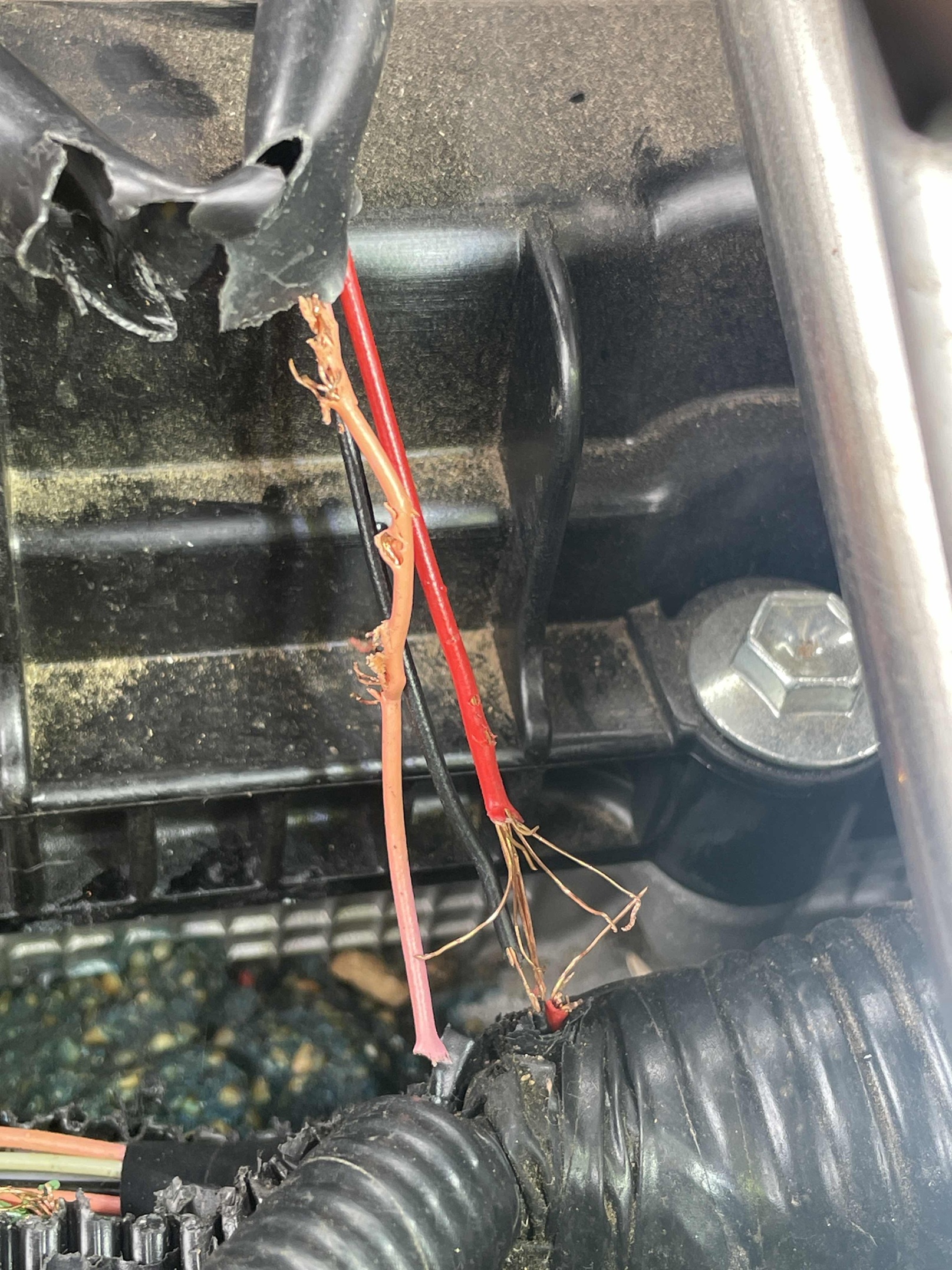
The vehicle had vermin damage to the number 3 ignition coil wiring.
This was fresh damage and unrelated to the other faults, or was it.
That repair was straightforward and completed early on — but even after replacing the engine harness, the no-start condition remained. It was definitely hoped that addition damage was going to be found that was the cause of the no start. Nothing else was found.
This confirmed more was more going on.
2️⃣ No ECU Communication & Ignition That Wouldn’t Turn Off
Even with the ignition coil wiring repaired:
This pointed away from individual components and straight back to power and ignition control logic.
Eventually, the root cause was found:
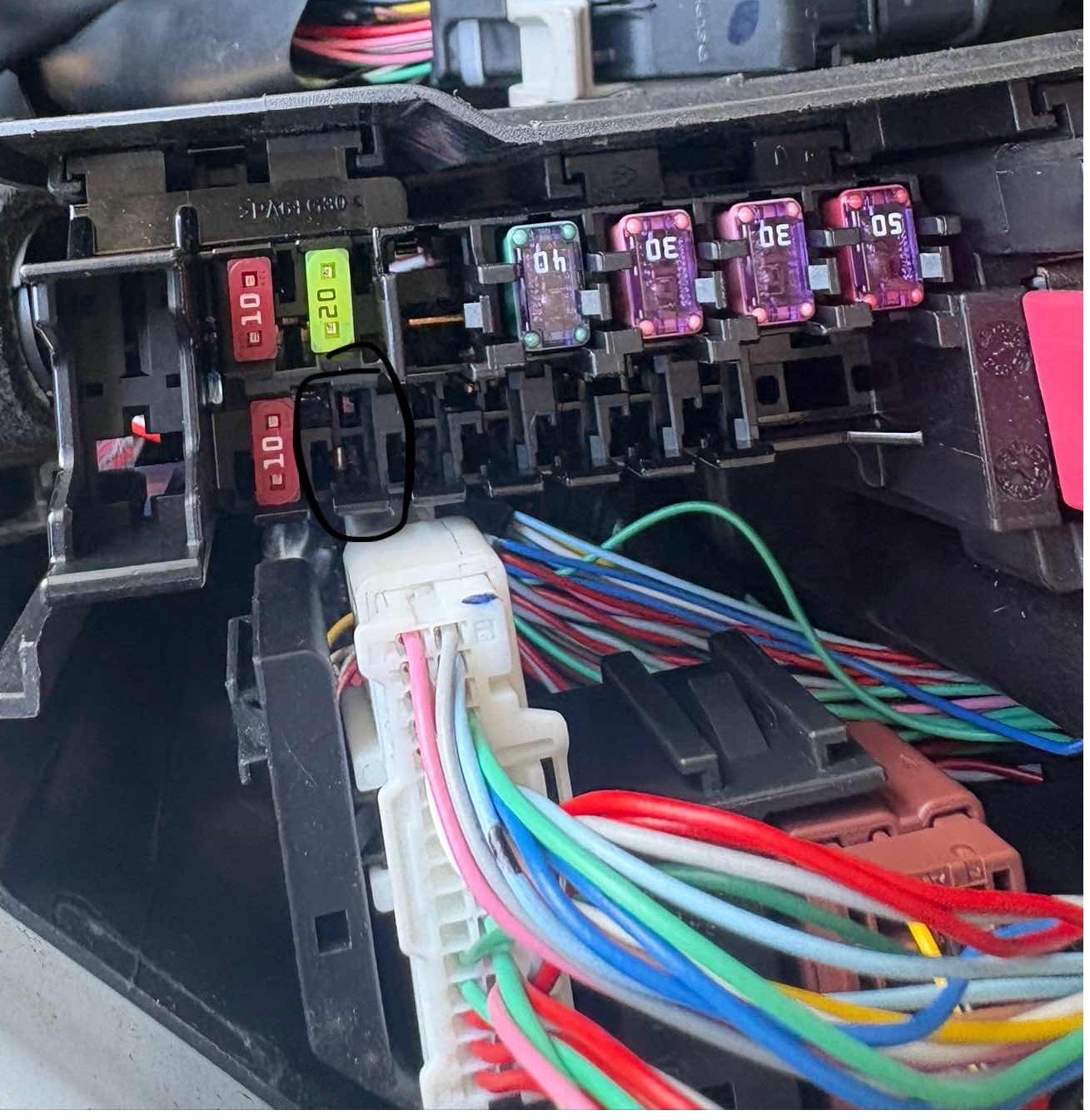
Yes — it’s easy to say “check fuses first” after you know which one has failed. Where this one was hidden and knowing that no one else has made the effort, does give you happy thoughts.
Without wiring diagrams, component locations, or fuse mapping, the only way to find it was by physically following the wiring and understanding what that circuit had to feed.
That fuse fault alone was enough to:
Once repaired, correct ignition behaviour and ECU communication were restored. Engine start and running.
3️⃣ Power Tailgate – Not as Simple as It Looks

The power tailgate issue was a separate fault again.
The vehicle had previously had minor panel repairs to the tailgate, after which:
Despite this, the tailgate would:
Scan tools only showed button request data — no meaningful fault information.
What’s often overlooked is that modern power tailgates are not simple motors:
So yes — it had “power” … what about signal and switching?
After careful inspection, the issue turned out to be deceptively simple: (again after tracing the wiring and removing numerous trims)
Once properly connected:
No parts required. Just correct connection and confirmation.
Why This Job Took Time (And Why That Matters)
This job wasn’t difficult because the faults were exotic.
It was difficult because:
Every step had to be proven, not assumed.
Why This Vehicle Was Finally Fixed
This vehicle wasn’t fixed with a magic scan tool or a dealer-only trick.
It was fixed by:
That approach:
Why We Take on the Jobs Others Walk Away From
People often ask why we’ll take on vehicles that dealer workshops and other independent workshops have already given up on.
It’s not arrogance, and it’s not about thinking we know more than everyone else.
It’s about the challenge.
These are the jobs where the fault isn’t obvious, the data is incomplete or unavailable, and there’s no clear roadmap. They require time, patience, system knowledge, and the willingness to stay engaged when progress is slow and answers aren’t immediate.
There’s also a reality that doesn’t get talked about enough — many of these vehicles aren’t abandoned because they’re impossible to fix. They’re abandoned because they don’t fit flat-rate structures, KPI targets, or the time pressure of high-volume workshops.
For us, that’s where the work actually becomes interesting.
The more of these jobs you take on, the more you’re forced to:
And the more you do that, the better you get.
There is a real sense of satisfaction — call it a dopamine hit if you like — in fixing something that:
It’s not about proving anyone wrong.
It’s about seeing a problem through to the end and fixing it properly.
The Takeaway
Modern diagnostics isn’t about who checks the most boxes or owns the fanciest tools.
It’s about understanding systems well enough to keep going when the wiring diagrams stop and being prepared to follow a circuit all the way to the end.
That’s how this one got fixed — and why process still beats parts swapping every time.
AUTOWORKS
We understand it is not just a car – it is an extension of your passion. We know that is important. This is why we offer everything automotive. We offer all your automotive needs and desires.
Mon to Fri: 8am–5pm
Sat/Sun: Closed

171 Evans Rd, Salisbury QLD 4107
Phone: (07) 3123 5373
Email: service@autoworks.com.au